IVECO ON: From Legacy Tool to Intelligent Fleet Platform
End-to-end UX redesign that transformed IVECO's digital ecosystem into an award-winning smart fleet management experience — recognized with the iF Design Award 2026.
Overview
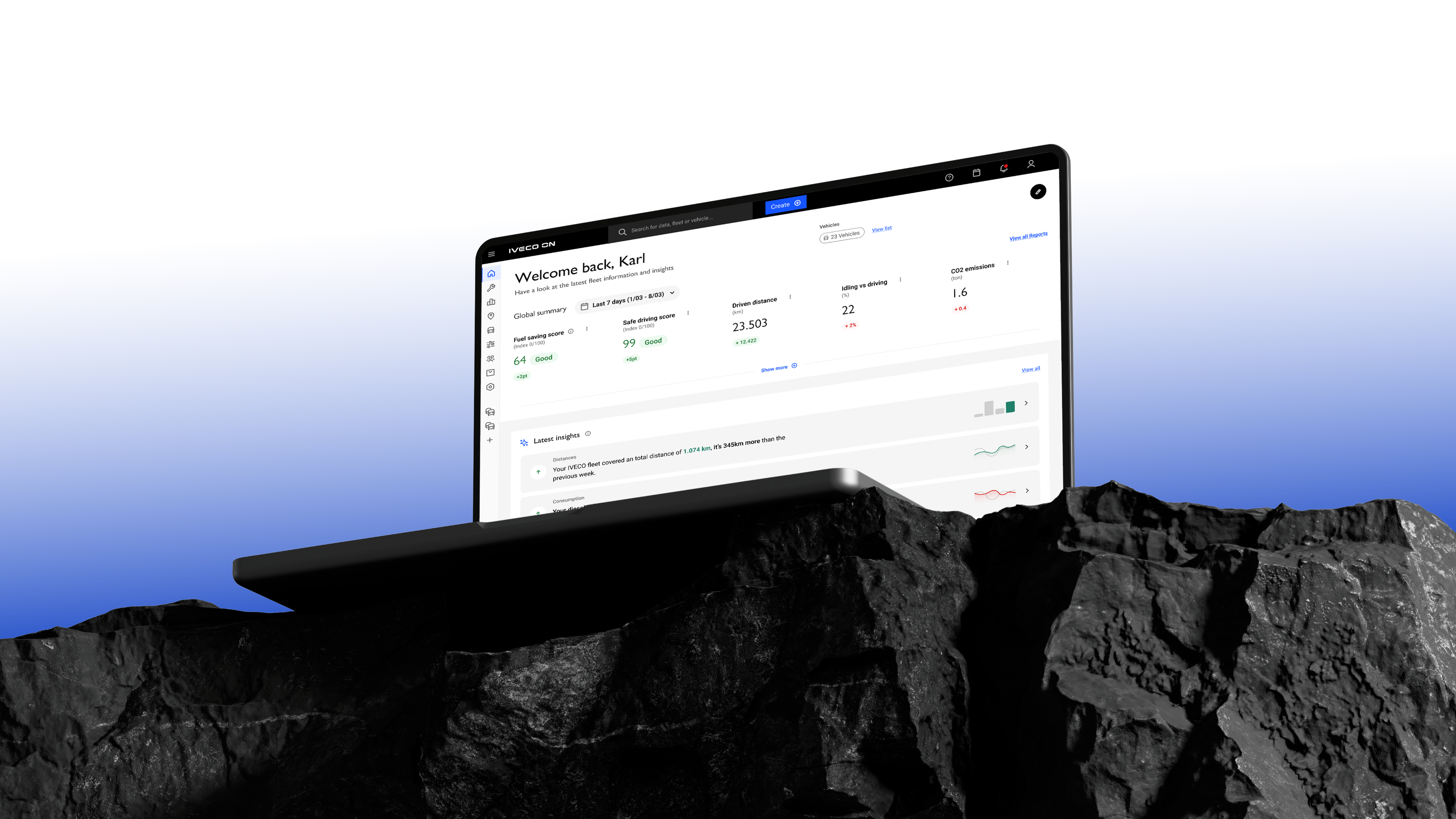
IVECO ON is IVECO's fleet management platform, redesigned as a next-generation fleet advisor combining real-time data, predictive maintenance, and intelligent insights into a single, cohesive interface.
As the UX designer, I owned this transformation end to end: redefining a legacy monitoring tool into a smarter, more intuitive experience that puts the right information in front of the right person at the right moment.
Challenge
The legacy IVECO ON was built to monitor, not to guide. Screens were fragmented, hard to navigate, and disconnected from real user needs. The platform needed to evolve from a data display tool into a proactive fleet advisor.Three core challenges shaped the redesign:
- Fleet Visibility: data split across dashboards by range and fuel type, with no unified fleet view
- Ease of Use: interfaces too complex for daily use
- Data Reliability: inconsistent data that slowed down decisions
My Role
I am the sole UX designer at IVECO working on IVECO ON, owning the project from early research to live implementation. Over nearly three years, my responsibilities grew alongside the platform: from research and stakeholder workshops, to a six-month collaboration with frog (Capgemini Invent) for prototyping and concept testing, to leading the project independently both before and after their engagement. Today, every design decision on the platform is mine to make.
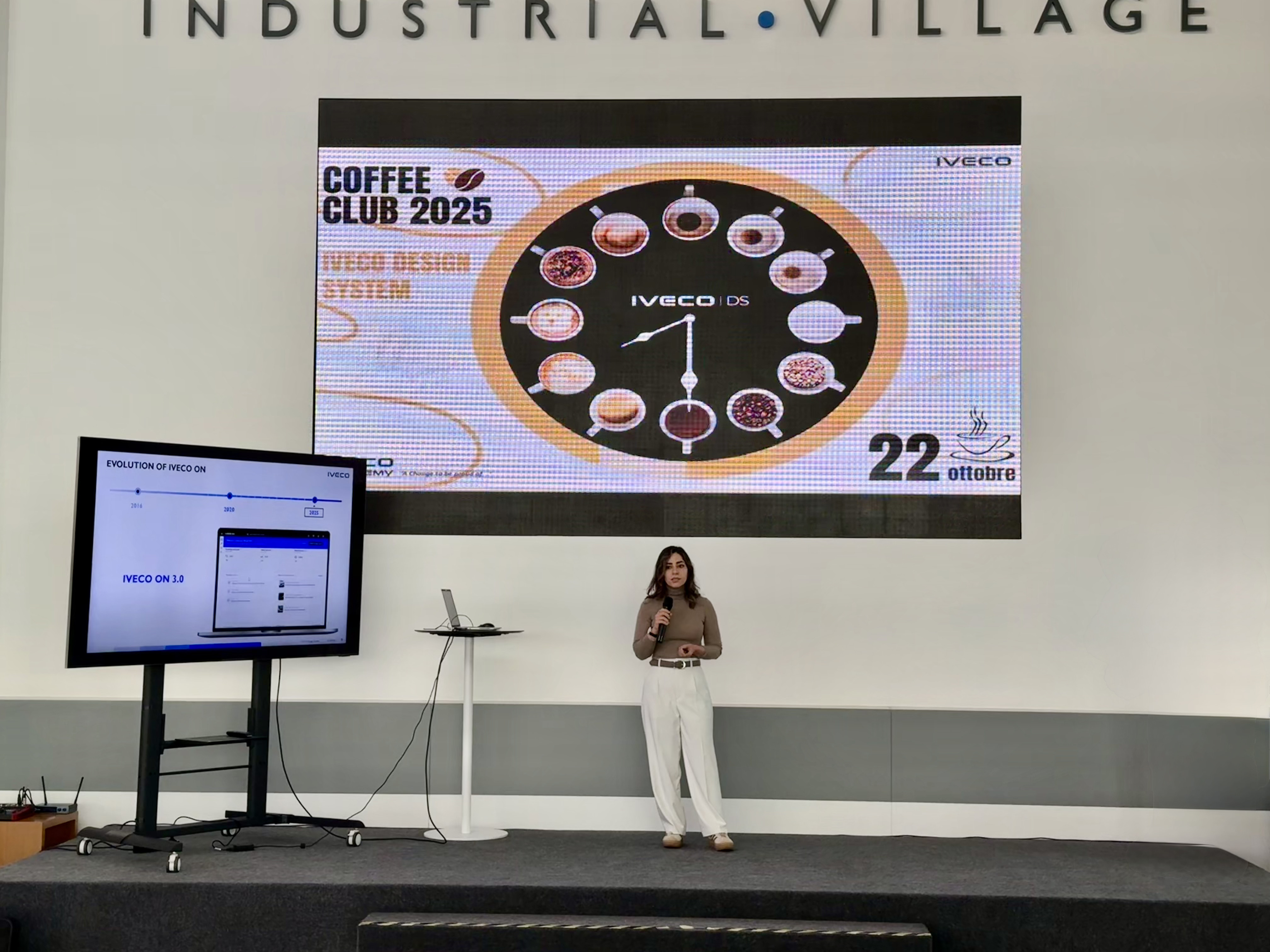
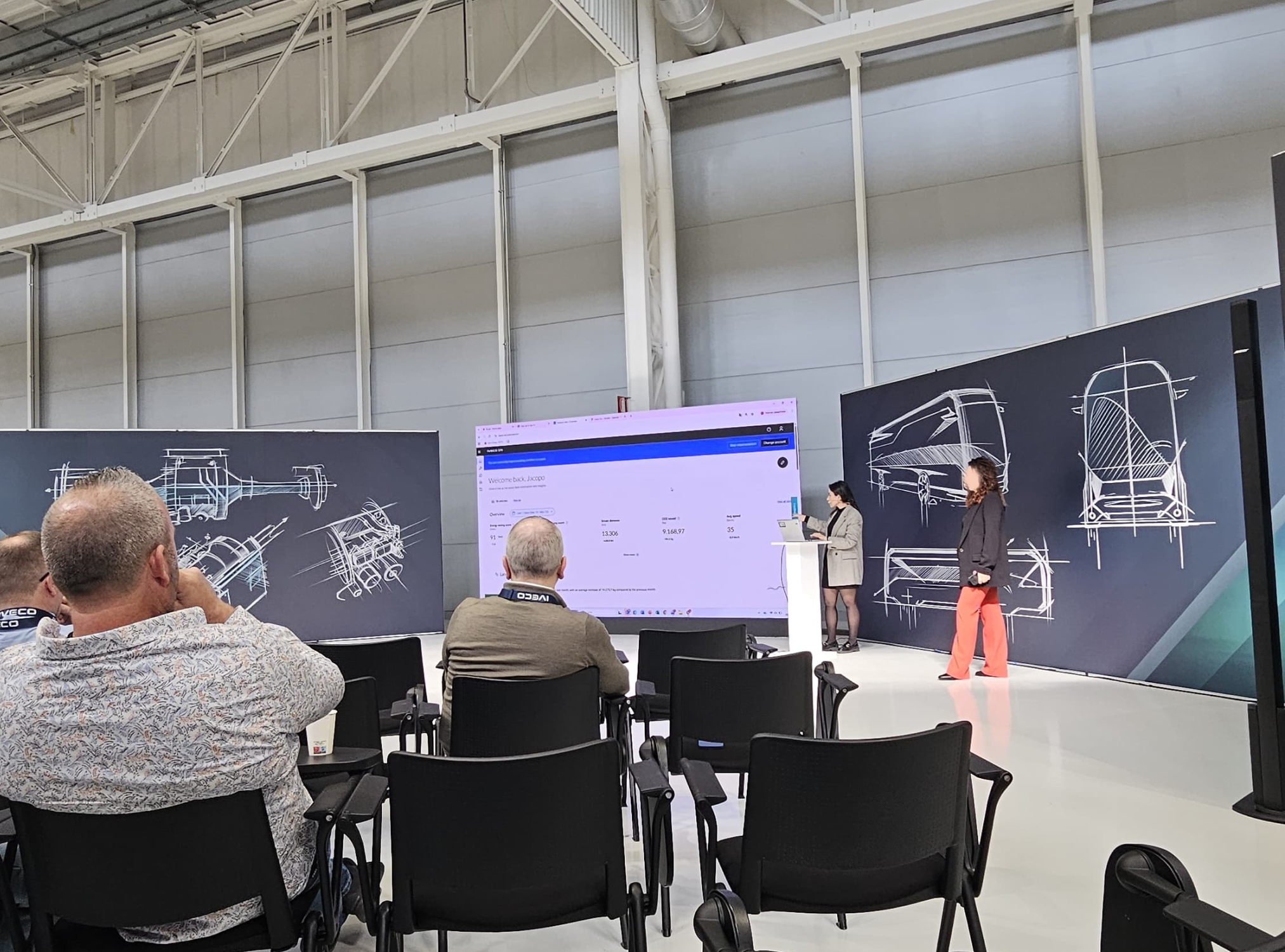
Design Language System presentation to IVECO colleagues, showcasing the technical components developed for IVECO ON
Final Design
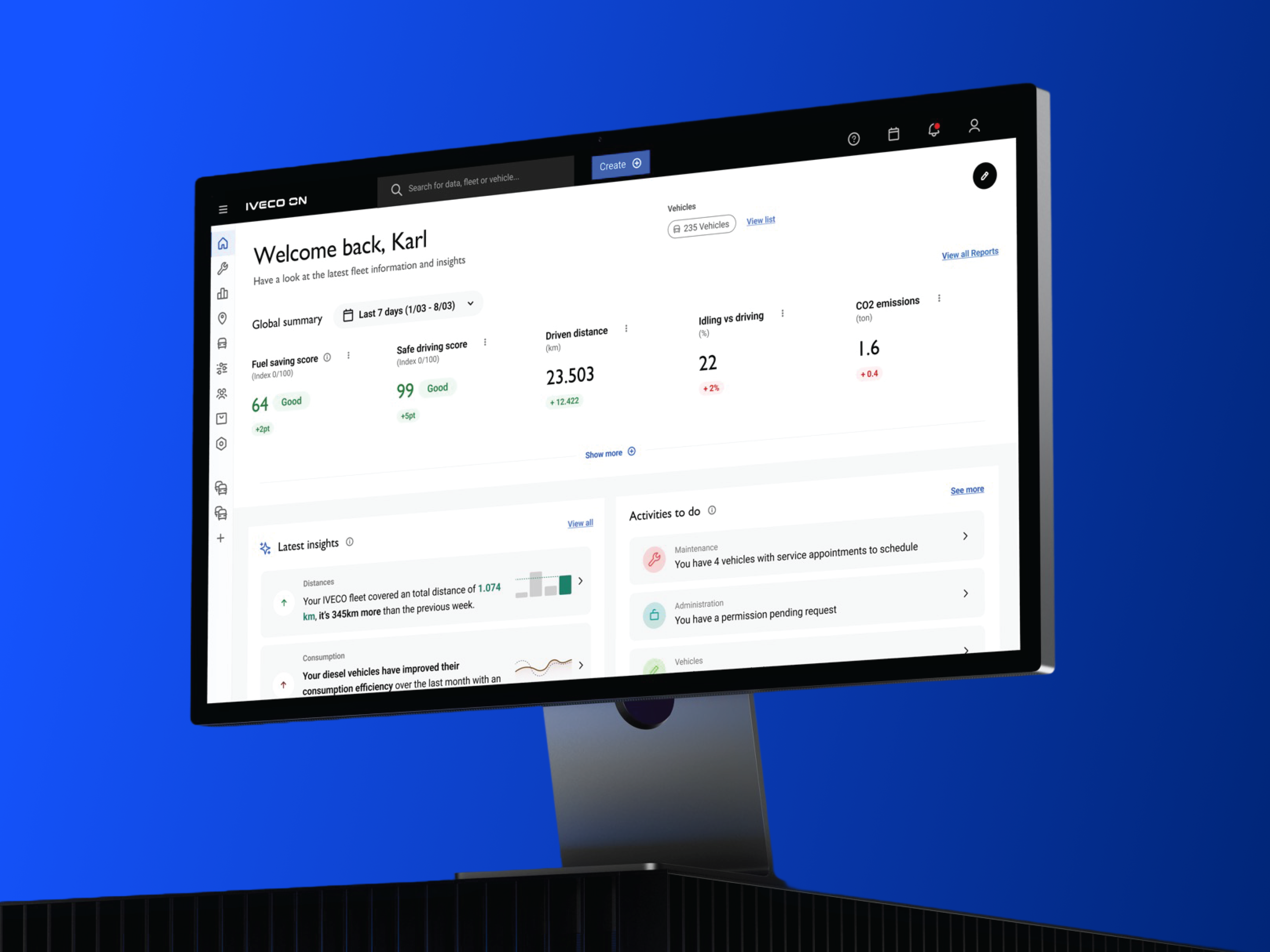
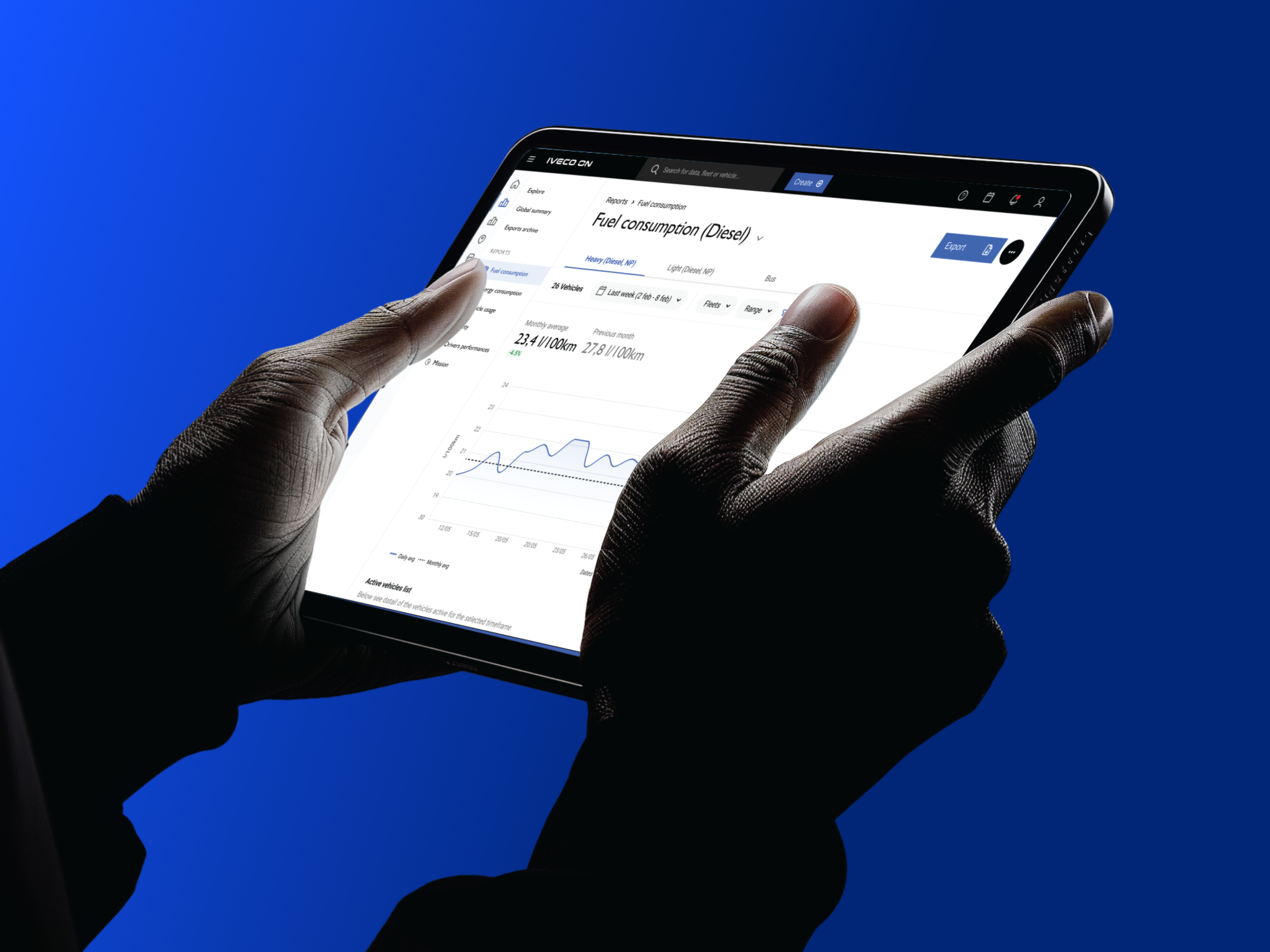
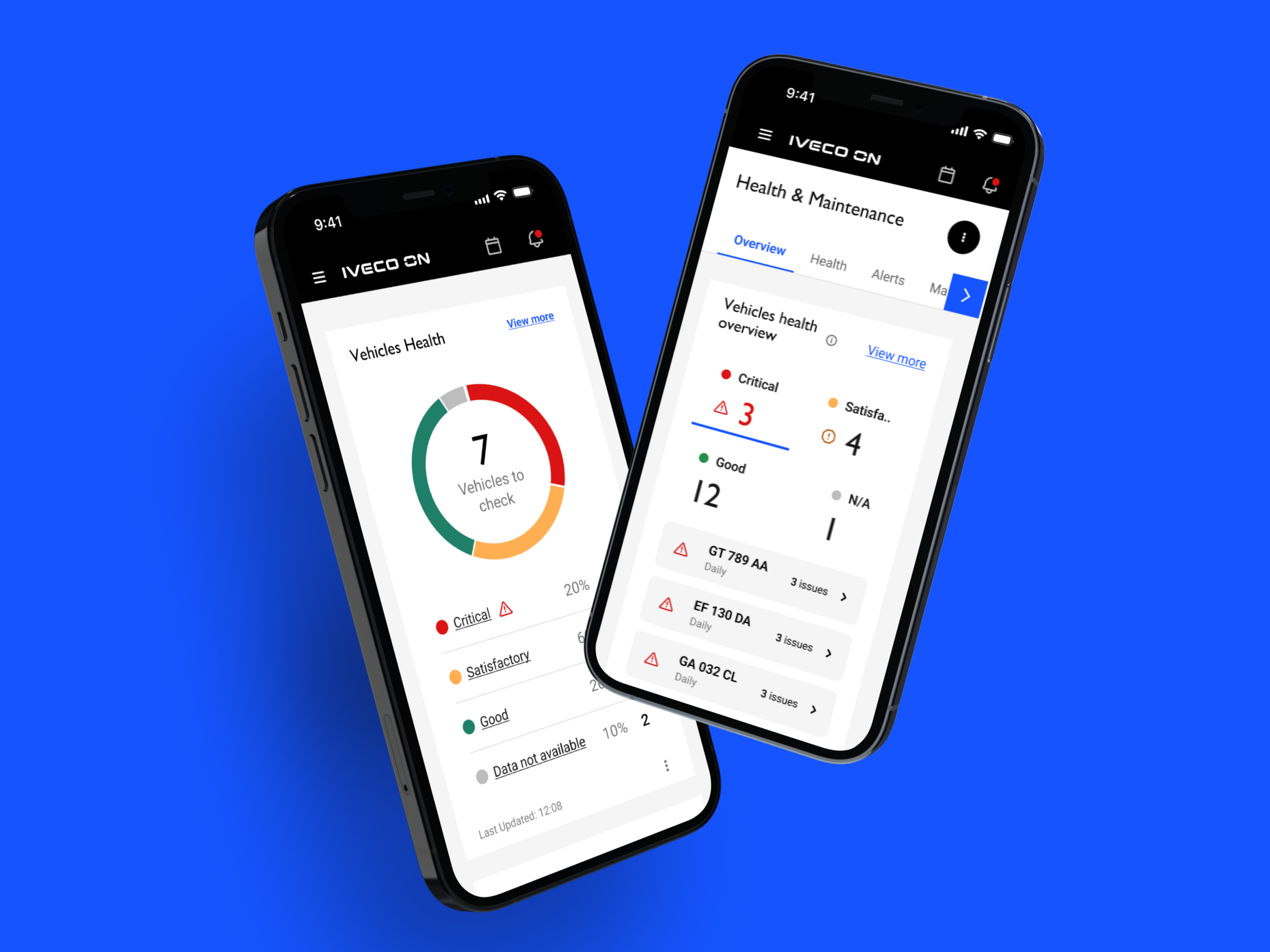
The redesigned IVECO ON platform, live in production and used daily by fleet managers across Europe.
Process
The project followed a Design Thinking approach. Four rounds of customer feedback were built into the process, ensuring every decision was grounded in real user needs.
40+
1-1 qualitative interviews
14+
workshops with stakeholder
96
User survey responses
Empathize
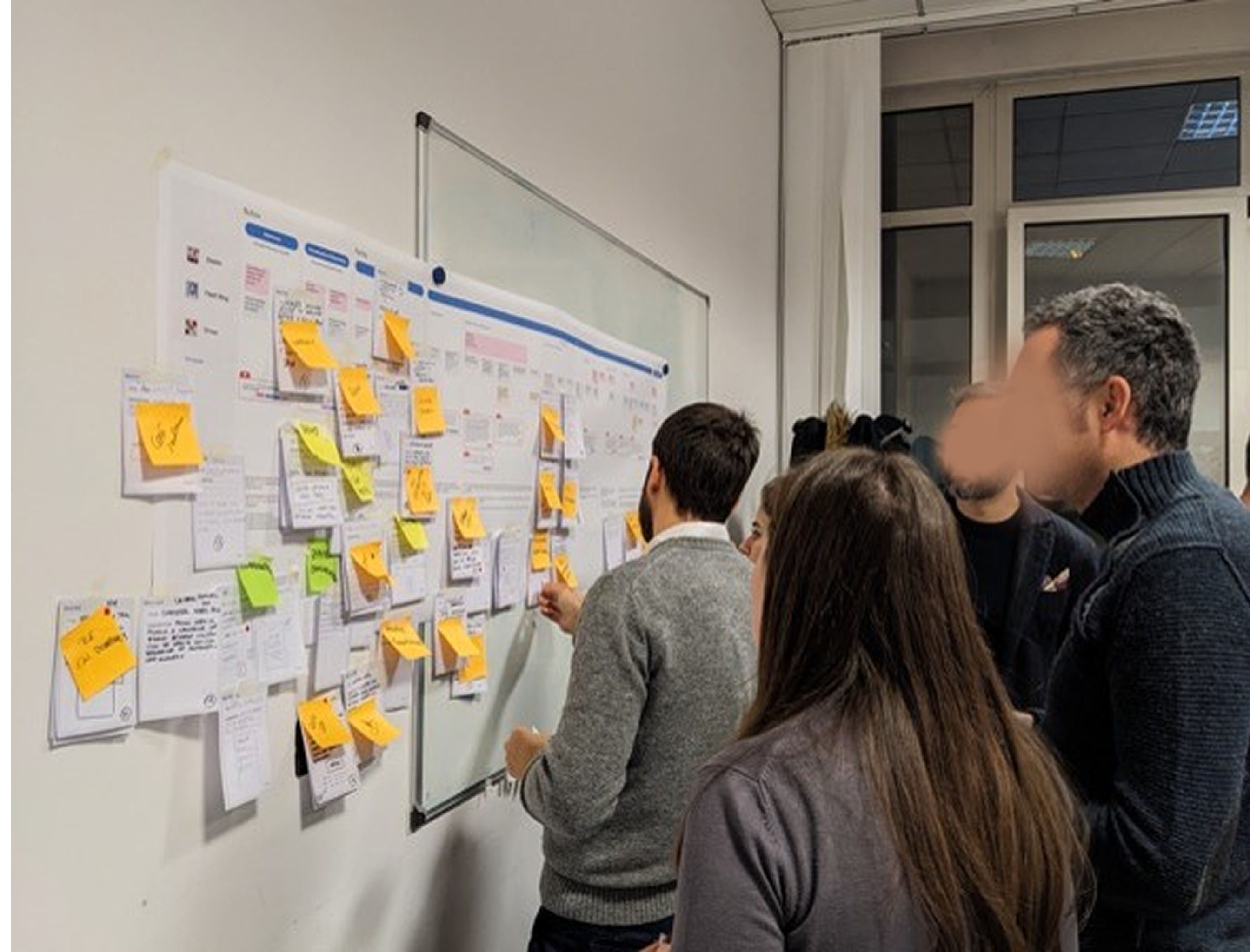
The project started with deep user research. We ran 12 workshops with customer centers and markets, interviewed dealers and fleet managers, and ran a dedicated fleet manager survey. Competitor benchmarking completed the research phase, giving us everything we needed to make informed design decisions grounded in real user behavior.
Define & Ideate
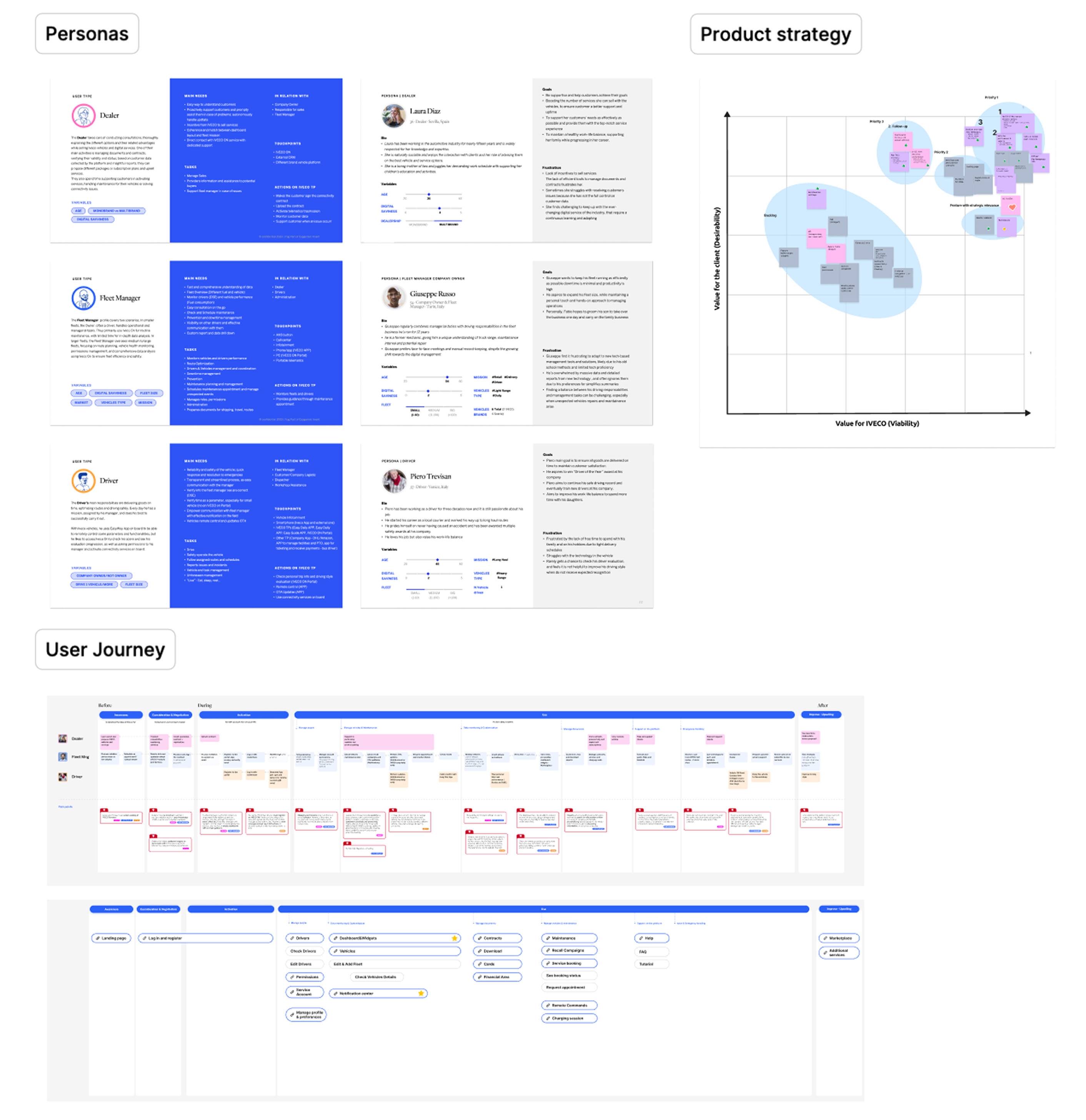
Working together with frog, we translated research insights into strategic direction. This phase included stakeholder interviews, UX analysis, and desk research. Two ideation workshops helped align the team around a shared vision. From there, we defined personas and user journeys, shaped the data visualisation strategy, analysed and refined the Design Language System, and mapped out the migration strategy.
Prototype, Test & Iterate
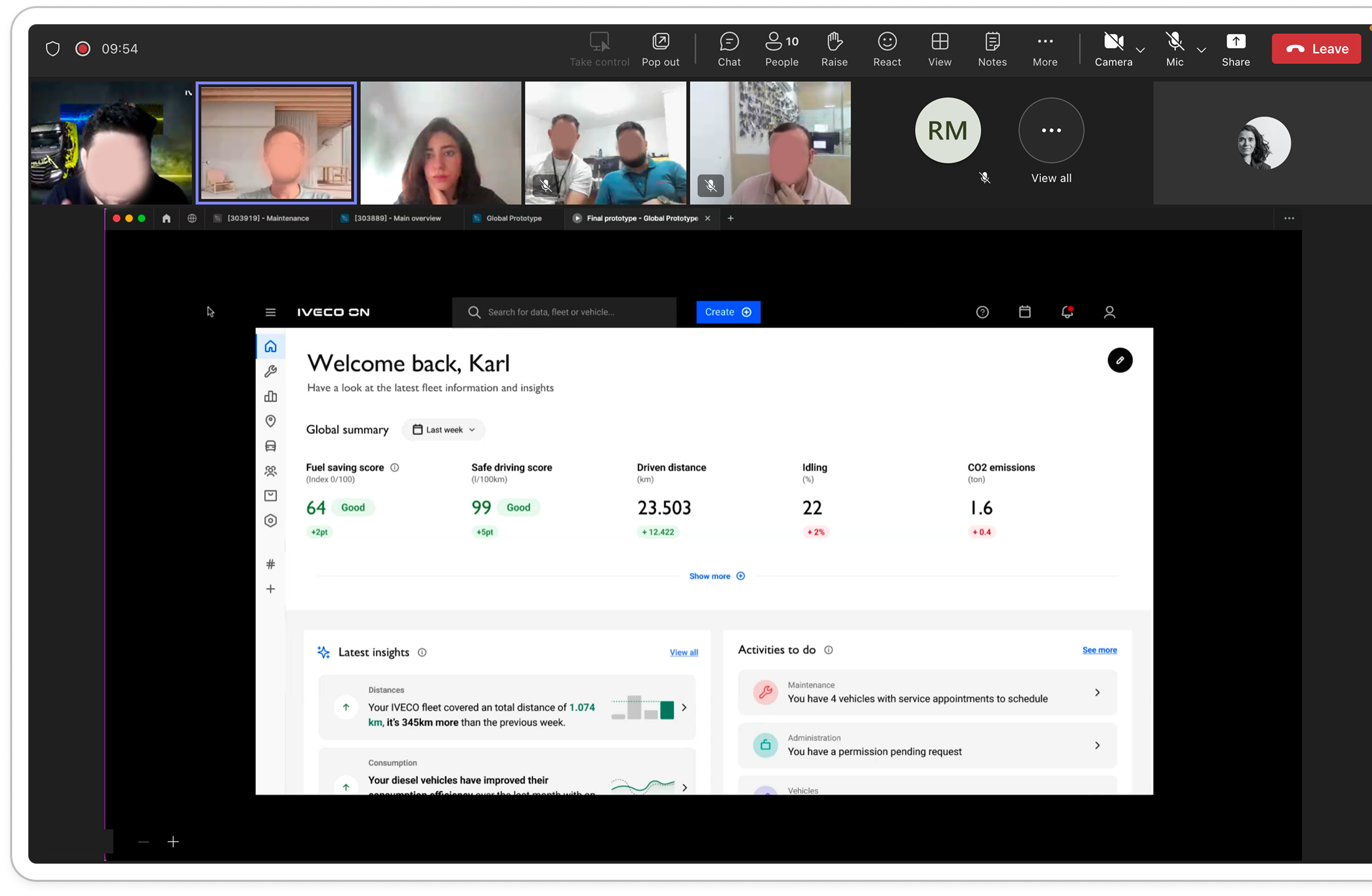
Concepts were turned into detailed designs and tested with real users at every stage. This phase covered concept design, feature creation, and DLS refinement.We validated the work through a concept test and a full usability test, each followed by synthesis. Every round of testing fed directly back into the design, sharpening the experience before development began.

Implement & Validate
Throughout the implementation phase, I continued refining mockups and supporting backlog refinement. Multiple rounds of user acceptance testing were conducted with the development team before releasing to the production environment. Two rounds of canary testing followed, during which I collected user feedback. I also prepared the demo and training materials to support the rollout.
iF Design Award 2026
IVECO ON was recognised with the prestigious iF Design Award for Outstanding Digital User Experience.This recognition is a meaningful validation of the work, the process, and the people who shaped it.
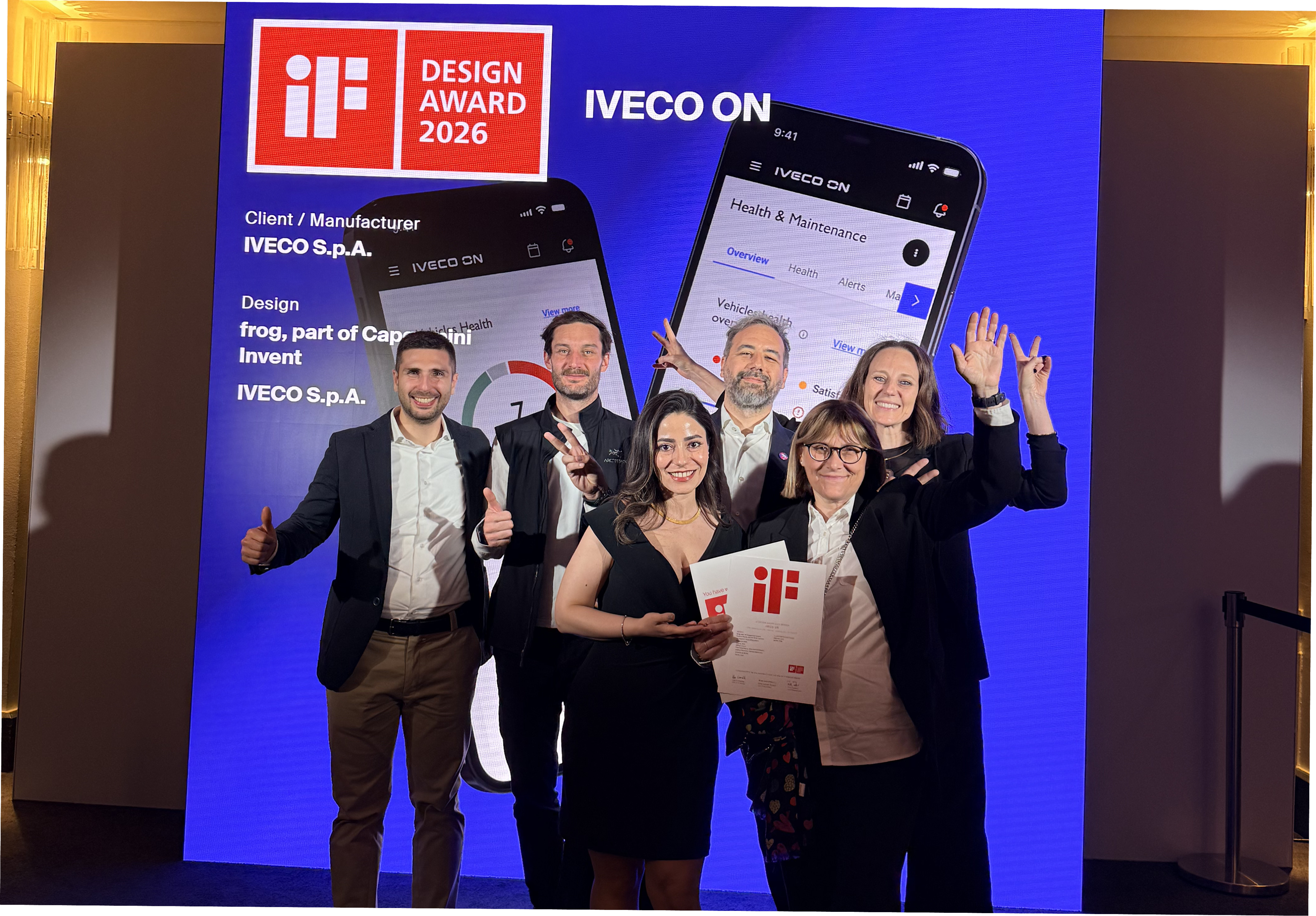
IF design award night - Berlin 2026
My Reflection
Nearly three years on the same product taught me that good design is never finished. Every user interview, every test, and every piece of feedback moves it forward. The platform today is different from what it was a year ago, not because we redesigned it, but because the people using it kept showing us where it could be better.
Some of the hardest moments had nothing to do with pixels or prototypes. They were about navigating ambiguity when the direction was not clear, aligning stakeholders who had different visions, and keeping the user perspective central when business priorities pushed in other directions. There were times when I had to defend a design decision I deeply believed in, and times when I had to let go of one. Learning to tell the difference between those two moments, and doing both without losing the integrity of the experience, is what I am most proud of.
IVECO ON: From Legacy Tool to Intelligent Fleet Platform
End-to-end UX redesign that transformed IVECO's digital ecosystem into an award-winning smart fleet management experience — recognized with the iF Design Award 2026.
Overview
IVECO ON is IVECO's fleet management platform, redesigned as a next-generation fleet advisor combining real-time data, predictive maintenance, and intelligent insights into a single, cohesive interface.
As the UX designer, I owned this transformation end to end: redefining a legacy monitoring tool into a smarter, more intuitive experience that puts the right information in front of the right person at the right moment.
Challenge
The legacy IVECO ON was built to monitor, not to guide. Screens were fragmented, hard to navigate, and disconnected from real user needs. The platform needed to evolve from a data display tool into a proactive fleet advisor.Three core challenges shaped the redesign:
- Fleet Visibility: data split across dashboards by range and fuel type, with no unified fleet view
- Ease of Use: interfaces too complex for daily use
- Data Reliability: inconsistent data that slowed down decisions
My Role
I am the sole UX designer at IVECO working on IVECO ON, owning the project from early research to live implementation. Over nearly three years, my responsibilities grew alongside the platform: from research and stakeholder workshops, to a six-month collaboration with frog (Capgemini Invent) for prototyping and concept testing, to leading the project independently both before and after their engagement. Today, every design decision on the platform is mine to make.
Design Language System presentation to IVECO colleagues, showcasing the technical components developed for IVECO ON
Final Design
The redesigned IVECO ON platform, live in production and used daily by fleet managers across Europe.
Process
The project followed a Design Thinking approach. Four rounds of customer feedback were built into the process, ensuring every decision was grounded in real user needs.
40+
1-1 qualitative interviews
14+
workshops with stakeholder
96
User survey responses
Empathize
The project started with deep user research. We ran 12 workshops with customer centers and markets, interviewed dealers and fleet managers, and ran a dedicated fleet manager survey. Competitor benchmarking completed the research phase, giving us everything we needed to make informed design decisions grounded in real user behavior.
Define & Ideate
Working together with frog, we translated research insights into strategic direction. This phase included stakeholder interviews, UX analysis, and desk research. Two ideation workshops helped align the team around a shared vision. From there, we defined personas and user journeys, shaped the data visualisation strategy, analysed and refined the Design Language System, and mapped out the migration strategy.
Prototype, Test & Iterate
Concepts were turned into detailed designs and tested with real users at every stage. This phase covered concept design, feature creation, and DLS refinement.We validated the work through a concept test and a full usability test, each followed by synthesis. Every round of testing fed directly back into the design, sharpening the experience before development began.
Implement & Validate
Throughout the implementation phase, I continued refining mockups and supporting backlog refinement. Multiple rounds of user acceptance testing were conducted with the development team before releasing to the production environment. Two rounds of canary testing followed, during which I collected user feedback. I also prepared the demo and training materials to support the rollout.
iF Design Award 2026
IVECO ON was recognised with the prestigious iF Design Award for Outstanding Digital User Experience.This recognition is a meaningful validation of the work, the process, and the people who shaped it.
IF design award night - Berlin 2026
My Reflection
Nearly three years on the same product taught me that good design is never finished. Every user interview, every test, and every piece of feedback moves it forward. The platform today is different from what it was a year ago, not because we redesigned it, but because the people using it kept showing us where it could be better.
Some of the hardest moments had nothing to do with pixels or prototypes. They were about navigating ambiguity when the direction was not clear, aligning stakeholders who had different visions, and keeping the user perspective central when business priorities pushed in other directions. There were times when I had to defend a design decision I deeply believed in, and times when I had to let go of one. Learning to tell the difference between those two moments, and doing both without losing the integrity of the experience, is what I am most proud of.
IVECO ON: From Legacy Tool to Intelligent Fleet Platform
End-to-end UX redesign that transformed IVECO's digital ecosystem into an award-winning smart fleet management experience — recognized with the iF Design Award 2026.
Overview
IVECO ON is IVECO's fleet management platform, redesigned as a next-generation fleet advisor combining real-time data, predictive maintenance, and intelligent insights into a single, cohesive interface.
As the UX designer, I owned this transformation end to end: redefining a legacy monitoring tool into a smarter, more intuitive experience that puts the right information in front of the right person at the right moment.
Challenge
The legacy IVECO ON was built to monitor, not to guide. Screens were fragmented, hard to navigate, and disconnected from real user needs. The platform needed to evolve from a data display tool into a proactive fleet advisor.Three core challenges shaped the redesign:
- Fleet Visibility: data split across dashboards by range and fuel type, with no unified fleet view
- Ease of Use: interfaces too complex for daily use
- Data Reliability: inconsistent data that slowed down decisions
My Role
I am the sole UX designer at IVECO working on IVECO ON, owning the project from early research to live implementation. Over nearly three years, my responsibilities grew alongside the platform: from research and stakeholder workshops, to a six-month collaboration with frog (Capgemini Invent) for prototyping and concept testing, to leading the project independently both before and after their engagement. Today, every design decision on the platform is mine to make.
Design Language System presentation to IVECO colleagues, showcasing the technical components developed for IVECO ON
Final Design
The redesigned IVECO ON platform, live in production and used daily by fleet managers across Europe.
Process
The project followed a Design Thinking approach. Four rounds of customer feedback were built into the process, ensuring every decision was grounded in real user needs.
40+
1-1 qualitative interviews
14+
workshops with stakeholder
96
User survey responses
Empathize
The project started with deep user research. We ran 12 workshops with customer centers and markets, interviewed dealers and fleet managers, and ran a dedicated fleet manager survey. Competitor benchmarking completed the research phase, giving us everything we needed to make informed design decisions grounded in real user behavior.
Define & Ideate
Working together with frog, we translated research insights into strategic direction. This phase included stakeholder interviews, UX analysis, and desk research. Two ideation workshops helped align the team around a shared vision. From there, we defined personas and user journeys, shaped the data visualisation strategy, analysed and refined the Design Language System, and mapped out the migration strategy.
Prototype, Test & Iterate
Concepts were turned into detailed designs and tested with real users at every stage. This phase covered concept design, feature creation, and DLS refinement.We validated the work through a concept test and a full usability test, each followed by synthesis. Every round of testing fed directly back into the design, sharpening the experience before development began.
Implement & Validate
Throughout the implementation phase, I continued refining mockups and supporting backlog refinement. Multiple rounds of user acceptance testing were conducted with the development team before releasing to the production environment. Two rounds of canary testing followed, during which I collected user feedback. I also prepared the demo and training materials to support the rollout.
iF Design Award 2026
IVECO ON was recognised with the prestigious iF Design Award for Outstanding Digital User Experience.This recognition is a meaningful validation of the work, the process, and the people who shaped it.
IF design award night - Berlin 2026
My Reflection
Nearly three years on the same product taught me that good design is never finished. Every user interview, every test, and every piece of feedback moves it forward. The platform today is different from what it was a year ago, not because we redesigned it, but because the people using it kept showing us where it could be better.
Some of the hardest moments had nothing to do with pixels or prototypes. They were about navigating ambiguity when the direction was not clear, aligning stakeholders who had different visions, and keeping the user perspective central when business priorities pushed in other directions. There were times when I had to defend a design decision I deeply believed in, and times when I had to let go of one. Learning to tell the difference between those two moments, and doing both without losing the integrity of the experience, is what I am most proud of.