Easy Way: Designed Around Real Drivers and Their Routines
Research and feature design for IVECO's professional truck driver app
Overview
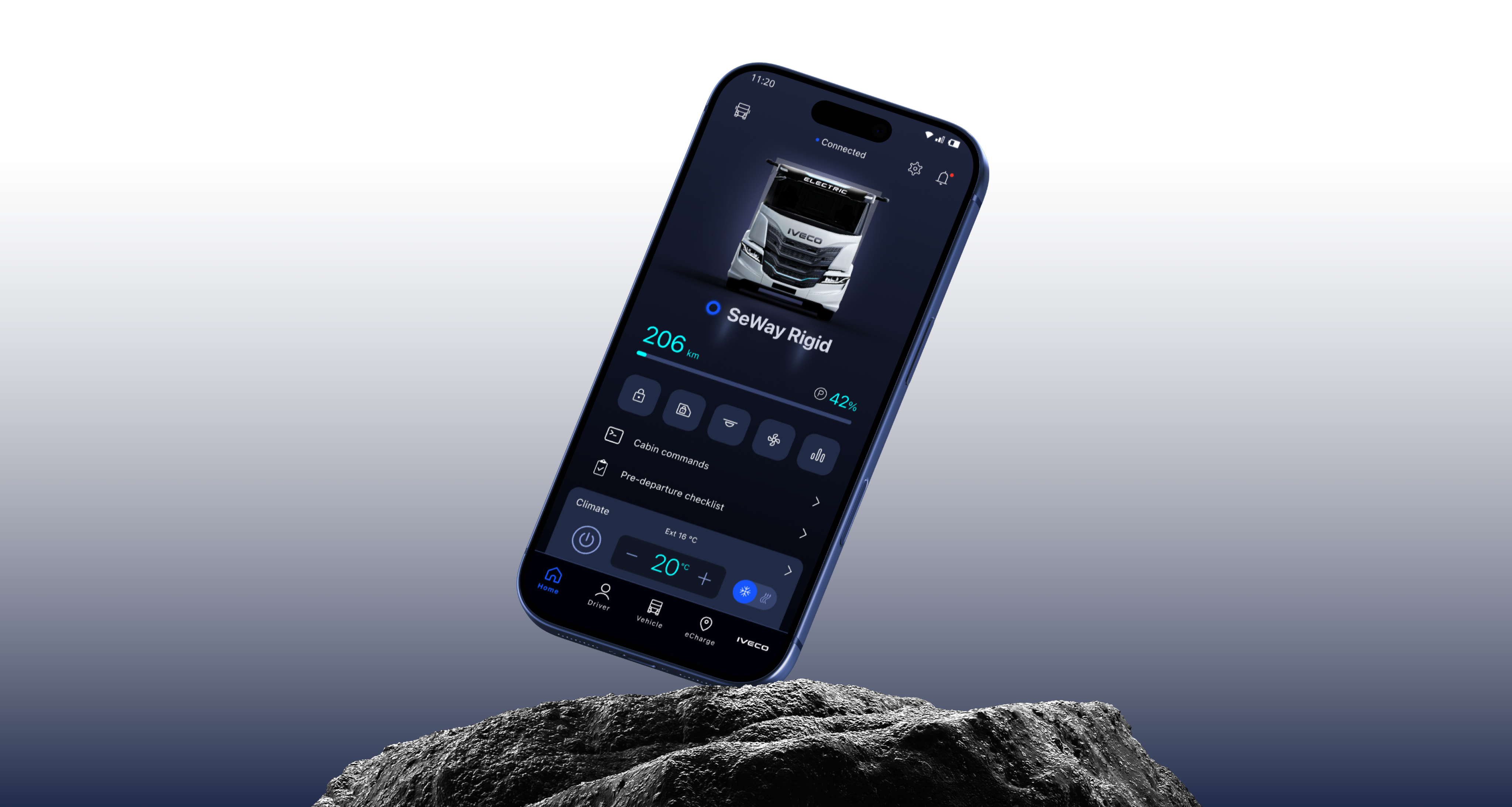
Easy Way is IVECO's app for professional truck drivers, built to reduce friction across every part of their working day. The original app covered the basics, but as IVECO's fleet expanded into electric vehicles, drivers needed something built around how they actually work, not around how the vehicle is engineered.
My Role
My involvement in Easy Way spans two moments in the product's history. Early on, I designed the pre-departure checklist feature, a structured tool to help drivers verify their vehicle was ready before setting off. More recently, I contributed to the research phase of the full redesign, conducting face-to-face interviews with drivers across multiple countries to understand their real habits, challenges, and needs. While I was not the lead designer on the redesign, the checklist flow I originally defined carried forward into the new product, now supported by a significantly improved visual interface.
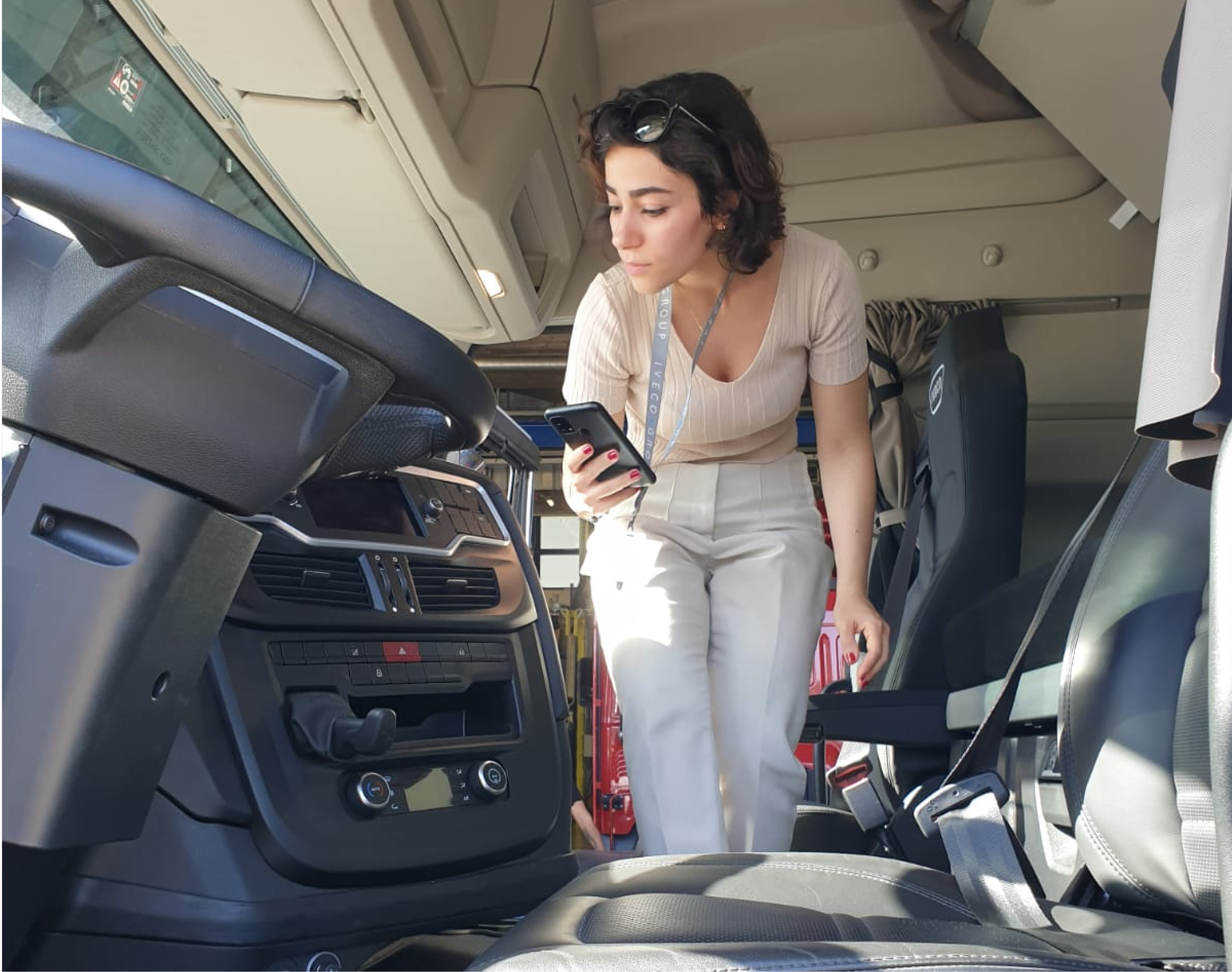
Testing the app onboard of the vehicle
The Redesign
Easy Way was not built for a driver someone imagined. It was built for the drivers the team actually met. The redesign did not start with screens. It started with listening, spending time in real cabs, at real depots, across multiple countries, before a single interface decision was made.
Research
The redesign did not start with screens. It started with listening. We conducted interviews with drivers across multiple countries, and met some of them face to face in Italy, talking to them in the environments where the app would actually be used.
Drivers turned out to be far more digitally connected than expected. Almost all of them used a mobile phone and WhatsApp daily, yet few were aware of dedicated vehicle apps.
Their biggest daily pressures were keeping to schedule, being away from family, and staying alert on the road. These were not abstract insights. They shaped every decision that followed.
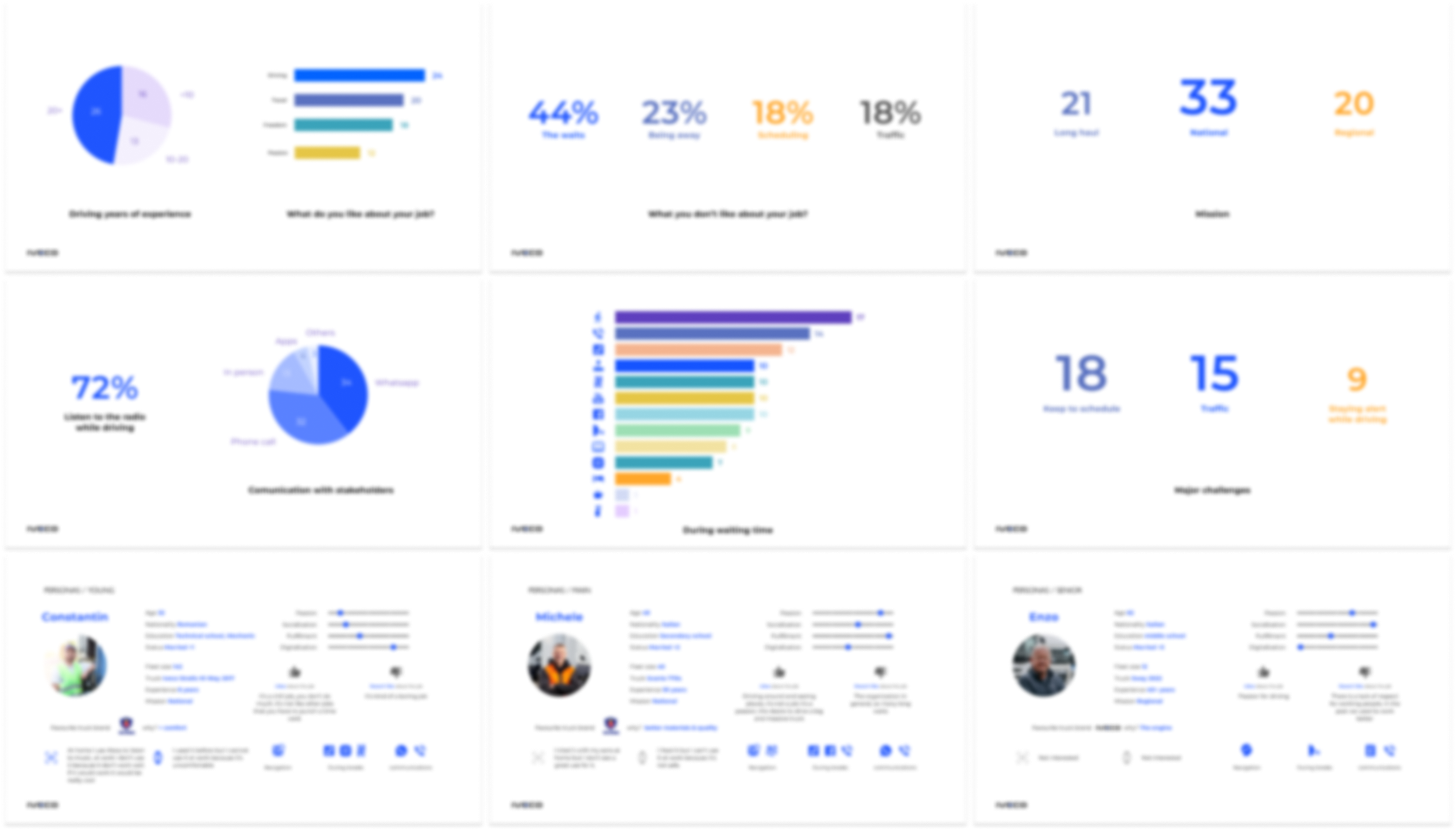
Research insights and personas (screens are blurred intentionally)
Pre-departure check
Before this feature existed, drivers relied on paper forms and memory before every departure. Avoidable issues were regularly discovered on the road rather than before it.
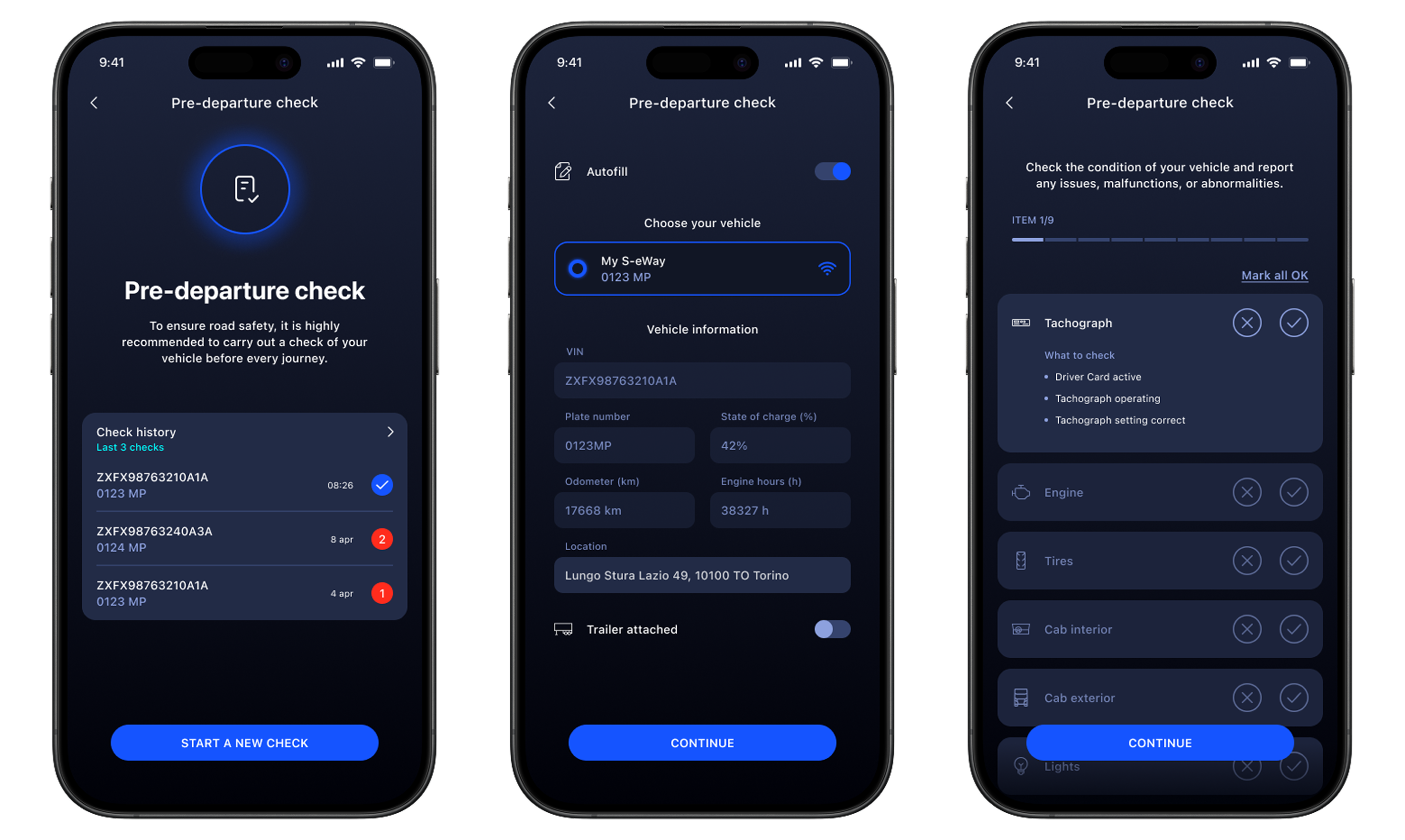
The checklist was designed around one principle: get the driver on the road sooner, with confidence. Connected vehicle data fills in automatically, pulling key information directly from the truck and keeping manual input to a minimum. Drivers then move through 10 components one at a time, marking each as OK or flagging an issue, with plain-language guidance on what to check and the option to add notes or photos. The flow closes with a full summary and a permanent digital record, replacing paperwork entirely.
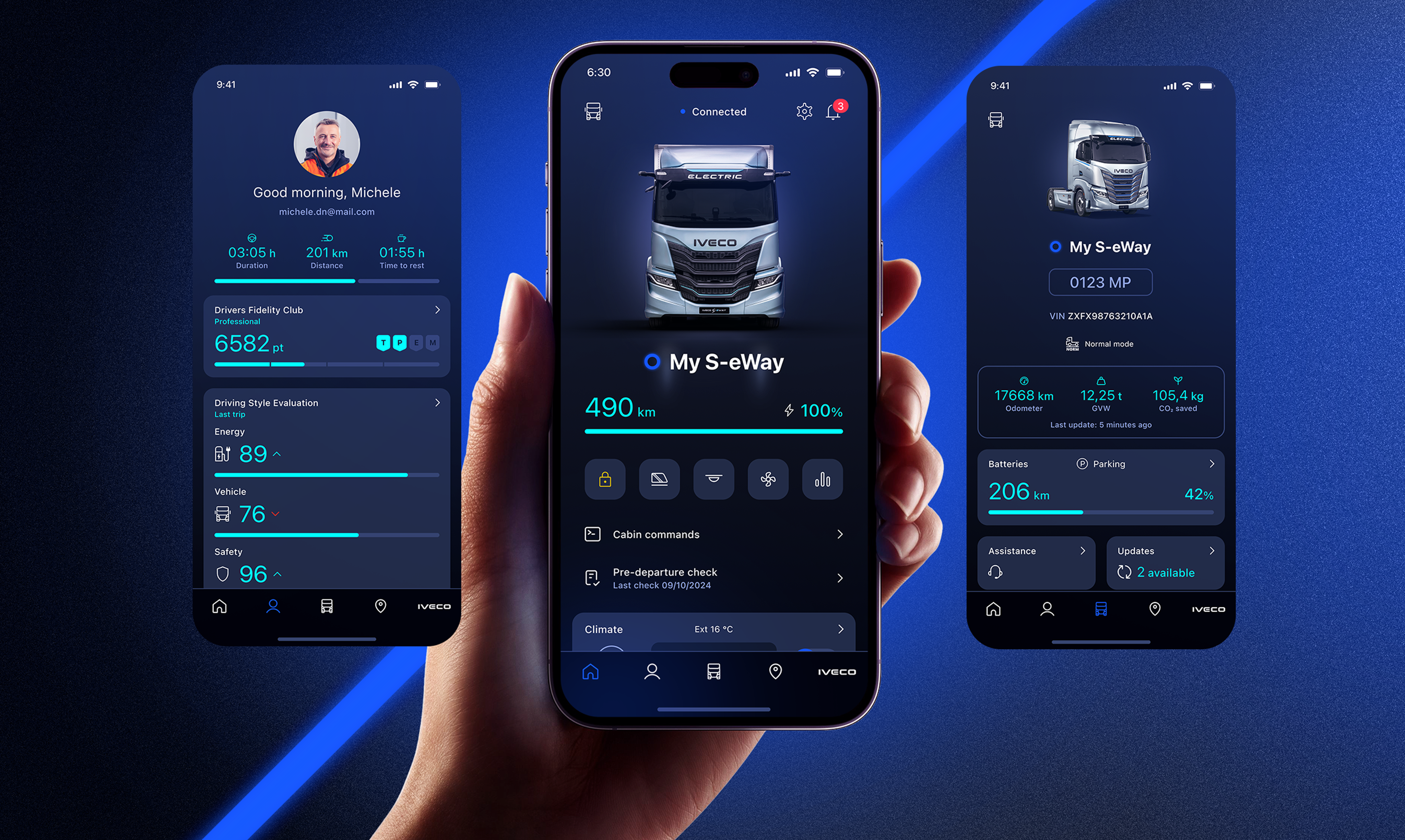
The redesigned Easy Way app is organized around the driver's world rather than the vehicle's systems, with a consistent visual language that makes every status, every function, and every action instantly clear.
My Reflection
Seeing the pre-departure check survive a full product redesign was a quiet but meaningful signal. When a team rebuilds an entire product and keeps your flow intact, it means the underlying logic was sound. That kind of longevity is something I now think about early in every project: not just whether something works today, but whether it will still make sense when everything around it changes.
Easy Way: Designed Around Real Drivers and Their Routines
Research and feature design for IVECO's professional truck driver app
Overview
Easy Way is IVECO's app for professional truck drivers, built to reduce friction across every part of their working day. The original app covered the basics, but as IVECO's fleet expanded into electric vehicles, drivers needed something built around how they actually work, not around how the vehicle is engineered.
My Role
My involvement in Easy Way spans two moments in the product's history. Early on, I designed the pre-departure checklist feature, a structured tool to help drivers verify their vehicle was ready before setting off. More recently, I contributed to the research phase of the full redesign, conducting face-to-face interviews with drivers across multiple countries to understand their real habits, challenges, and needs. While I was not the lead designer on the redesign, the checklist flow I originally defined carried forward into the new product, now supported by a significantly improved visual interface.
Testing the app onboard of the vehicle
The Redesign
Easy Way was not built for a driver someone imagined. It was built for the drivers the team actually met. The redesign did not start with screens. It started with listening, spending time in real cabs, at real depots, across multiple countries, before a single interface decision was made.
Research
The redesign did not start with screens. It started with listening. We conducted interviews with drivers across multiple countries, and met some of them face to face in Italy, talking to them in the environments where the app would actually be used.
Drivers turned out to be far more digitally connected than expected. Almost all of them used a mobile phone and WhatsApp daily, yet few were aware of dedicated vehicle apps.
Their biggest daily pressures were keeping to schedule, being away from family, and staying alert on the road. These were not abstract insights. They shaped every decision that followed.
Research insights and personas (screens are blurred intentionally)
Pre-departure check
Before this feature existed, drivers relied on paper forms and memory before every departure. Avoidable issues were regularly discovered on the road rather than before it.
The checklist was designed around one principle: get the driver on the road sooner, with confidence. Connected vehicle data fills in automatically, pulling key information directly from the truck and keeping manual input to a minimum. Drivers then move through 10 components one at a time, marking each as OK or flagging an issue, with plain-language guidance on what to check and the option to add notes or photos. The flow closes with a full summary and a permanent digital record, replacing paperwork entirely.
The redesigned Easy Way app is organized around the driver's world rather than the vehicle's systems, with a consistent visual language that makes every status, every function, and every action instantly clear.
My Reflection
Seeing the pre-departure check survive a full product redesign was a quiet but meaningful signal. When a team rebuilds an entire product and keeps your flow intact, it means the underlying logic was sound. That kind of longevity is something I now think about early in every project: not just whether something works today, but whether it will still make sense when everything around it changes.
Easy Way: Designed Around Real Drivers and Their Routines
Research and feature design for IVECO's professional truck driver app
Overview
Easy Way is IVECO's app for professional truck drivers, built to reduce friction across every part of their working day. The original app covered the basics, but as IVECO's fleet expanded into electric vehicles, drivers needed something built around how they actually work, not around how the vehicle is engineered.
My Role
My involvement in Easy Way spans two moments in the product's history. Early on, I designed the pre-departure checklist feature, a structured tool to help drivers verify their vehicle was ready before setting off. More recently, I contributed to the research phase of the full redesign, conducting face-to-face interviews with drivers across multiple countries to understand their real habits, challenges, and needs. While I was not the lead designer on the redesign, the checklist flow I originally defined carried forward into the new product, now supported by a significantly improved visual interface.
Testing the app onboard of the vehicle
The Redesign
Easy Way was not built for a driver someone imagined. It was built for the drivers the team actually met. The redesign did not start with screens. It started with listening, spending time in real cabs, at real depots, across multiple countries, before a single interface decision was made.
Research
The redesign did not start with screens. It started with listening. We conducted interviews with drivers across multiple countries, and met some of them face to face in Italy, talking to them in the environments where the app would actually be used.
Drivers turned out to be far more digitally connected than expected. Almost all of them used a mobile phone and WhatsApp daily, yet few were aware of dedicated vehicle apps.
Their biggest daily pressures were keeping to schedule, being away from family, and staying alert on the road. These were not abstract insights. They shaped every decision that followed.
Research insights and personas (screens are blurred intentionally)
Pre-departure check
Before this feature existed, drivers relied on paper forms and memory before every departure. Avoidable issues were regularly discovered on the road rather than before it.
The checklist was designed around one principle: get the driver on the road sooner, with confidence. Connected vehicle data fills in automatically, pulling key information directly from the truck and keeping manual input to a minimum. Drivers then move through 10 components one at a time, marking each as OK or flagging an issue, with plain-language guidance on what to check and the option to add notes or photos. The flow closes with a full summary and a permanent digital record, replacing paperwork entirely.
The redesigned Easy Way app is organized around the driver's world rather than the vehicle's systems, with a consistent visual language that makes every status, every function, and every action instantly clear.
My Reflection
Seeing the pre-departure check survive a full product redesign was a quiet but meaningful signal. When a team rebuilds an entire product and keeps your flow intact, it means the underlying logic was sound. That kind of longevity is something I now think about early in every project: not just whether something works today, but whether it will still make sense when everything around it changes.